
Build your sales funnel
An AI interview that maps the path from a stranger's first look to a sale: the first ask, each next step, what stops people buying, how you sell, and the pages and messages you need.
Most people build a sales page first and hope people find it. This starts with how a stranger first finds you, then maps every step from there to a sale.
It interviews you in six sections: how people enter, the path from attention to buying, what stops them, how selling should feel, the pages and messages you need, and where buyers are leaking out.
At the end it writes your funnel map, the order of your asks, the list of pages and messages to make, a map of objections and how to answer them, your sales style, the weak spots, and a prompt you can reuse whenever you build or fix a funnel.
It's the next step after Build your content system. Content gets attention; this turns attention into sales.
The quickest way
Pick your AI. We copy the prompt and open a new chat for you. Paste it, send, and answer one section at a time.
It reflects each answer back in a sentence and pushes back once if you're vague. That's on purpose.
The zip has the prompt and three test prompts for when you're done.
Download the zip Free zip
or copy the helper prompt
Interactive Sales Funnel + Conversion Builder

Purpose: Help a founder build the full path from attention to sale, including CTAs, funnel structure, sales process, objections, and conversion logic.

OPERATING RULES
- Ask one section at a time.
- Reflect back each answer in 1 sentence.
- Push back once when vague.
- Stay practical and conversion-focused.
- When complete, output:
1. funnel map
2. CTA map
3. objection map
4. conversion architecture
5. sales process rules
6. reusable funnel prompt

PART 1: THE INTERVIEW

Section 1: Entry Path
1. How does a stranger first enter the world?
2. What is the first ask?
3. What should the next step be after attention?

Section 2: Funnel Logic
1. What is the path from awareness to trust to action?
2. Is this a content-to-checkout flow, lead magnet flow, DM flow, call flow, webinar flow, community flow, or hybrid?
3. What should be the shortest path to money?

Section 3: Objections
1. What will stop people from buying?
2. What do they not trust?
3. What do they misunderstand?
4. What emotional objections matter most?

Section 4: Sales Style
1. Is this a no-call business, low-ticket conversion model, application funnel, close-by-call, DM sales, or hybrid?
2. What should selling feel like?
3. What should it never feel like?

Section 5: Conversion Assets
1. What assets are needed?
2. Sales page?
3. Checkout page?
4. Email sequence?
5. VSL?
6. DM script?
7. Diagnostic or quiz?

Section 6: Missing Conversion Layers
1. Where does friction exist?
2. What's unclear?
3. What is likely leaking buyers?

WHEN COMPLETE

Output:
- Funnel Overview
- CTA Hierarchy
- Conversion Asset List
- Objection Map
- Sales Process Style
- Funnel Weaknesses
- Final reusable Sales Funnel + Conversion Prompt

START THE INTERVIEW

Begin with:
"Let's build your Sales Funnel and Conversion System. First, how should a stranger ideally enter your world and what is the first action you want them to take?"
Step by step
1 Open a new chat and paste the prompt
Best in the same project as your earlier results, so the AI builds on them. Starting fresh is fine too.
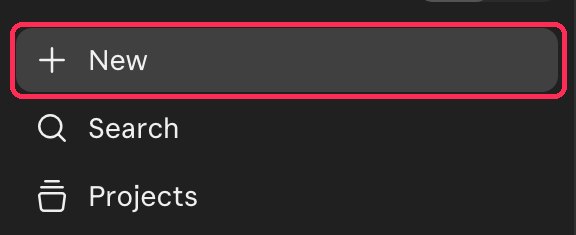
In Claude, click New at the top of the sidebar (or open your brand's project first).
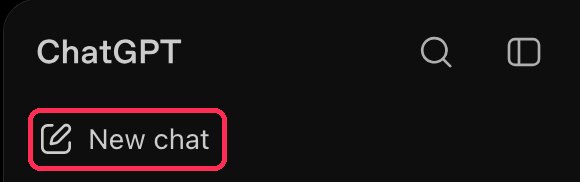
Or in ChatGPT, click New chat.
Paste the prompt from the top of this page into the message box and send it.
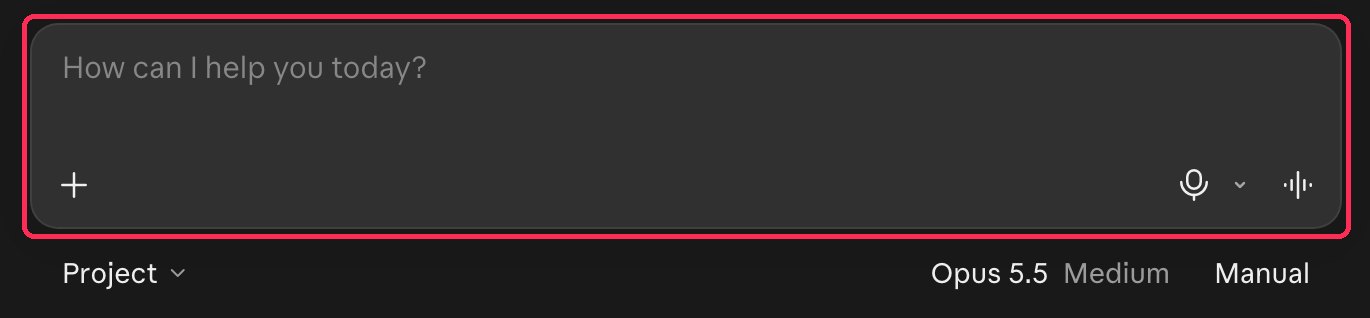
Same in ChatGPT: paste it into the message box and send.

2 Answer the six sections
It asks one section at a time, in this order. Talk the way you normally talk; messy is fine. You can stop and come back to the same chat later.
- 1. Entry path: how a stranger first finds you, the first thing you ask of them, and the step right after.
- 2. Funnel logic: the path from awareness to trust to action, which kind of funnel fits (straight to checkout, a free download, DMs, calls, a webinar, a community or a mix), and the shortest path to money.
- 3. Objections: what stops people buying, what they don't trust, what they misunderstand, and the emotional reasons that matter most.
- 4. Sales style: no calls, low price, applications, calls, DMs or a mix, what selling should feel like, and what it should never feel like.
- 5. Conversion assets: which pieces you need, such as a sales page, checkout, email sequence, sales video, DM script, or a quiz.
- 6. Missing layers: where there's friction, what's unclear, and where buyers are most likely leaking out.
When it asks what stops people buying, list the real reasons you've heard, not the polite ones. Those become the answers your pages give.
3 Keep the result where your AI can use it
At the end you get the full result and a reusable prompt. Keep them in a project, so every chat in it starts from them.
In Claude, click Projects in the sidebar, then New project. (Already made one for your brand? Open it and add this result to its Context.)

Name it, add the result under Context (drop in the file, or add it manually and paste), then click Create project.
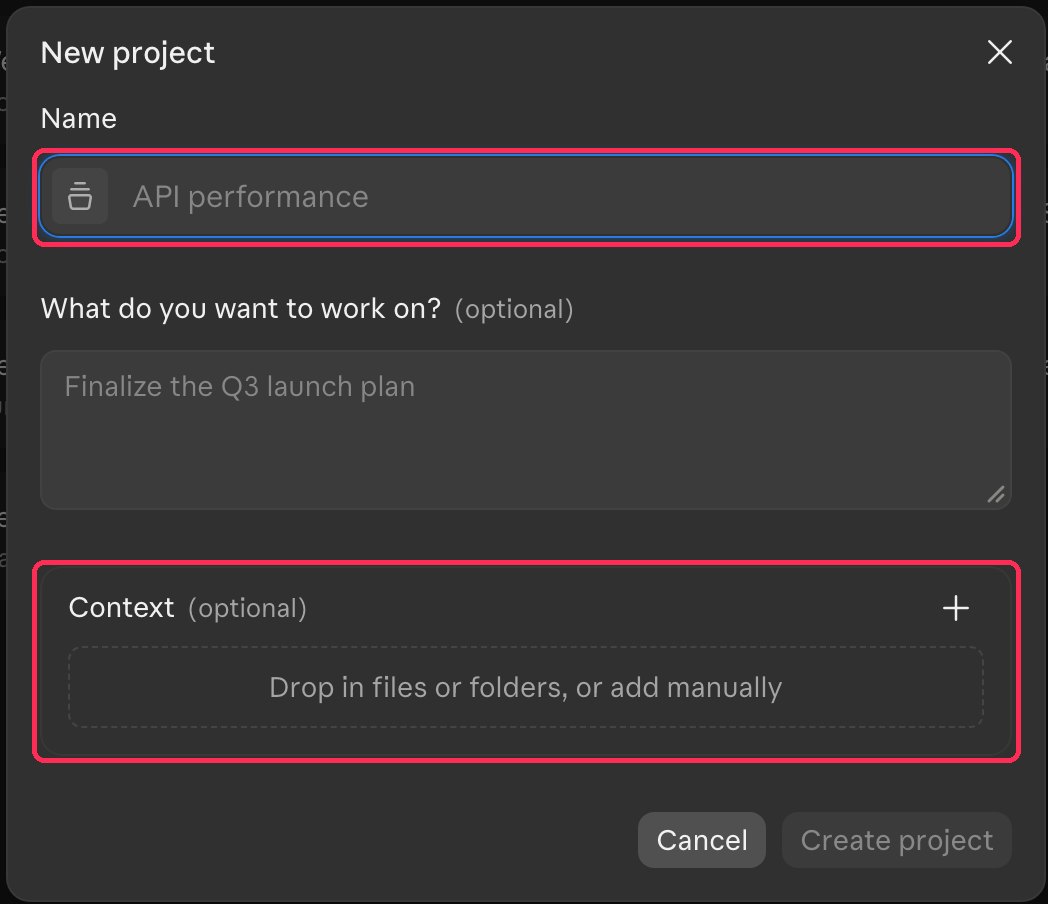
In ChatGPT: in the sidebar, click New project under Projects (or open your existing one) and paste the result into the project's instructions.
4 Test it
Open a new chat inside the project and try these. If an answer sounds generic, tell it which part of the result it missed.
Does it know your path?
Walk me through my funnel step by step, from a stranger's first look to paying, with the ask at each step.Can it answer objections?
Take my top three objections and write the line my sales page should use to answer each one.Can it find the leak?
Where in this funnel am I most likely losing buyers, and what's one change I can test this week?How do I best create a sales funnel for a small business?
Map how a stranger first finds you, then every step from there to a sale, before you build any page. Our free Sales Funnel Builder is an AI interview that maps the first ask, the objections that stop people buying, how you sell, and the pages and messages you need.
Good to know
- Map the funnel you actually have today first, even if it's just a link in your bio. Then improve it.
- Fewer steps usually sell better. Let it cut any step that doesn't earn its place.
- Build the conversion assets one at a time, starting with the one closest to the sale.
- Run it again when you launch a new offer or sales drop, and update the project.
What you'll have
Your sales path on one page: how strangers enter, every step to a sale, the objections and their answers, how you sell, the pages and messages to make, the leaks to fix, and a prompt to reuse every time you build or fix a funnel.
Part of Your brand and business, with AI: step 7 of 8